Sport and exercise as interventions in clinical care.
Sport and exercise are increasingly recognised not only as tools for performance, but as powerful interventions in clinical care. In this context, the School of Physical Education and Sport Science — one of the two schools that jointly deliver the Bachelor in Sport & Exercise Sciences for Health and Performance — actively contributes to advancing knowledge at the intersection of exercise and health.
On Sunday, 11 May 2025, an interdisciplinary scientific event titled "Therapeutic Interventions that Positively Affect the Quality of Life of Patients with Chronic Kidney Disease (CKD)" was held at the KEDAEA Building, AUTh, bringing together experts from multiple scientific domains.
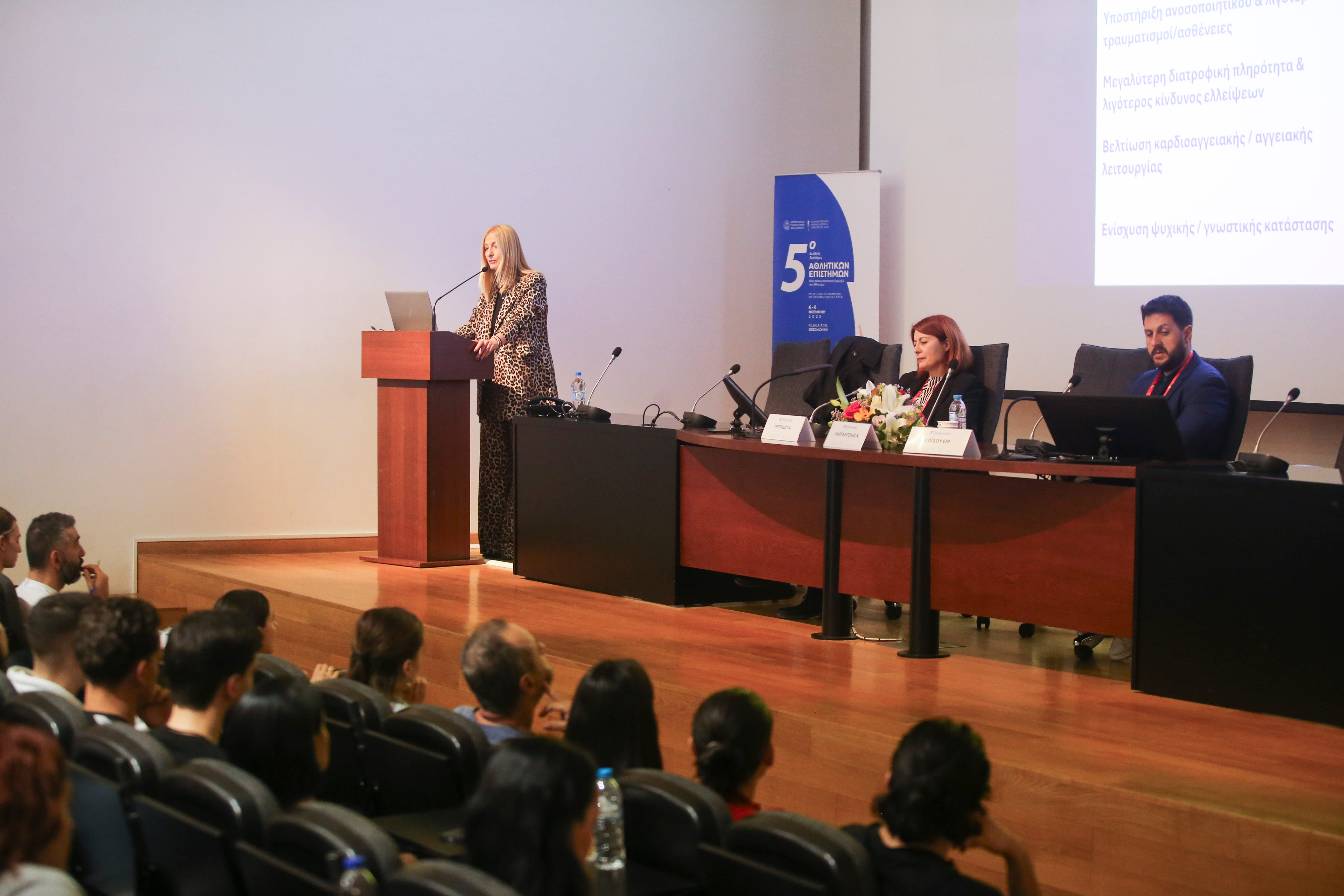
An interdisciplinary collaboration.
The event was organised through the collaboration of the Second Nephrology Clinic of AUTh, the Sports Medicine Laboratory of AUTh, the Hellenic Society for the Study of Immunology of Infection, and other research and healthcare institutions. This multidisciplinary initiative reflects a growing understanding: improving patients' lives requires integrated approaches that combine medicine, exercise science, and innovation.
The day brought together nephrologists, sports-medicine physicians, exercise physiologists, and immunology researchers — disciplines that have historically operated in parallel rather than together. The shared agenda was clinical: what does the evidence say about exercise as a therapeutic tool for patients living with chronic kidney disease, and how do we translate that evidence into routine care?
Why this matters.
Chronic Kidney Disease significantly affects patients' physical capacity, mental health, and overall well-being. Evidence-based exercise is increasingly recognised as an essential component of therapeutic strategy — capable of improving functional ability, reducing complications, and enhancing quality of life.
Through evidence-based exercise interventions, researchers and practitioners are exploring ways to enhance functional ability, reduce complications, and improve quality of life. Exercise is no longer seen as complementary — it is becoming an essential component of therapeutic strategy.
By participating in and supporting such initiatives, the School reinforces its mission to connect sport science with real societal needs. Students and researchers are exposed to real-world health challenges, gaining the knowledge and perspective required to contribute meaningfully to clinical populations.
The event was open to the public and invited students, professionals, and citizens to engage with cutting-edge scientific knowledge and practical applications. At the School of Physical Education and Sport Science, we do not see sport as an isolated discipline — we see it as a catalyst for health, inclusion, and life-changing impact.